← Work
Tree-Nation Tree Feed

The platform had millions of trees. Nobody was seeing them.

Redesigned how content is discovered and distributed on Tree-Nation, turning a static hashtag page system into an engagement-driven feed that became the default home for logged-in users.

Company
Tree-Nation
Role
Senior Product Designer
Scope
Strategy · UX · UI
Year
2025
01. The Problem

Content existed. Distribution didn't.

Tree-Nation didn't lack content. It lacked distribution.

The platform already had a "feed" through hashtag pages, but it was static and ineffective. Content was organized in grids with no clear ranking, weak engagement signals, and no continuity between sessions. Users would land, scroll a bit, and leave.

For B2B clients, this was even more frustrating. They were investing in custom tree content (branded campaigns, tree dedications, corporate forests) with no visibility into whether anyone was actually seeing it.

"When publishing content on the platform, we don't know if anyone is actually seeing it."

Internal stakeholder

The system treated trees as isolated outputs. There was no mechanism to turn them into something that spreads.
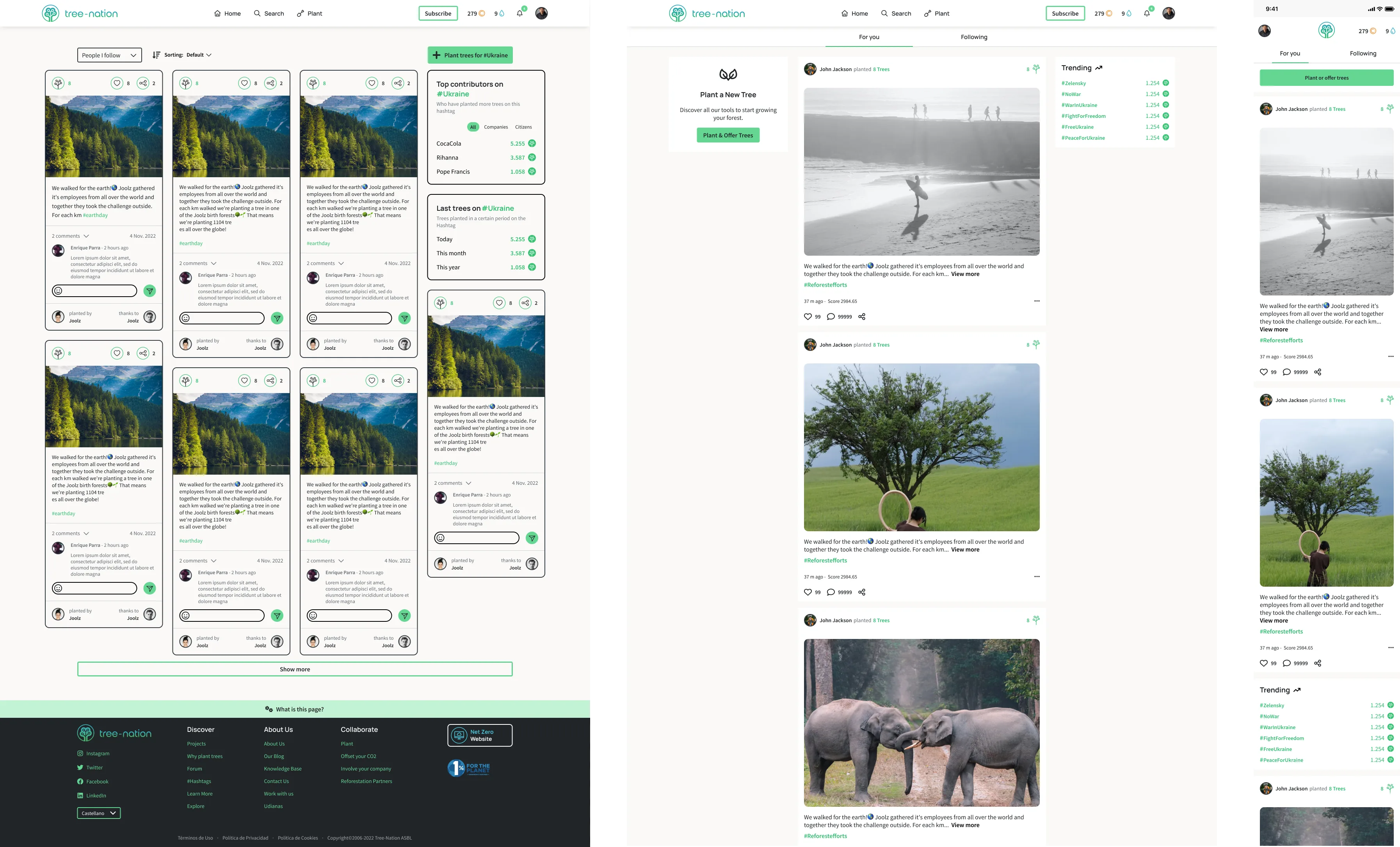
Before and after: old hashtag grid vs. new Tree Feed
Before and after: static hashtag grid vs. engagement-driven feed
02. Framing the Opportunity

From pages to system

The shift wasn't designing a better page. It was redefining how content works in the product.

Trees were already content. They just weren't behaving like it. The platform had built a repository; what it needed was a distribution engine.

Core reframe

The product didn't have a content problem. It had a distribution problem.

Content without a mechanism to spread is invisible. Designing the feed meant designing the rules by which trees become visible, earn attention, and get amplified, not just designing a layout.

03. The System

Designing a feed, not a page

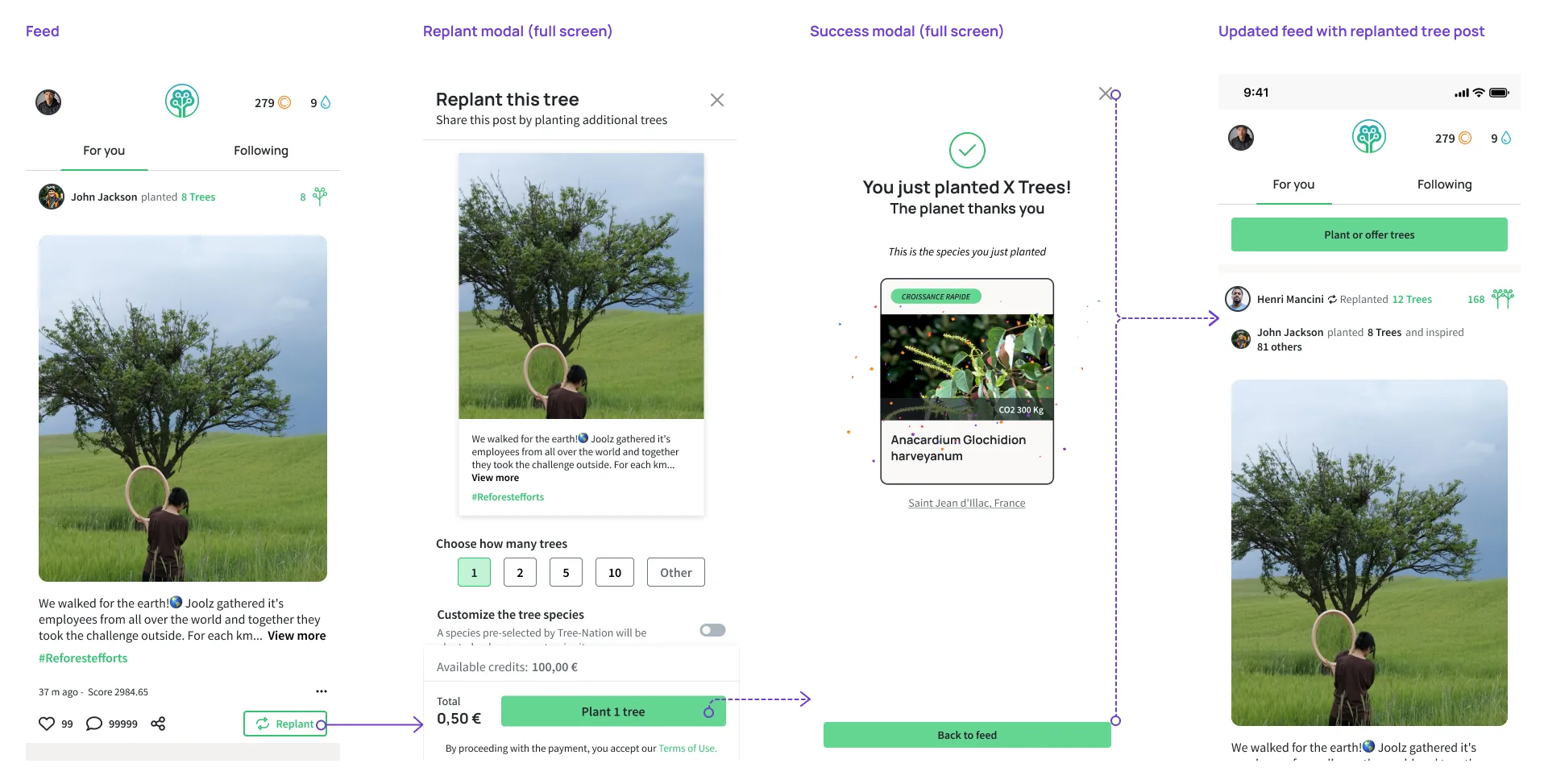
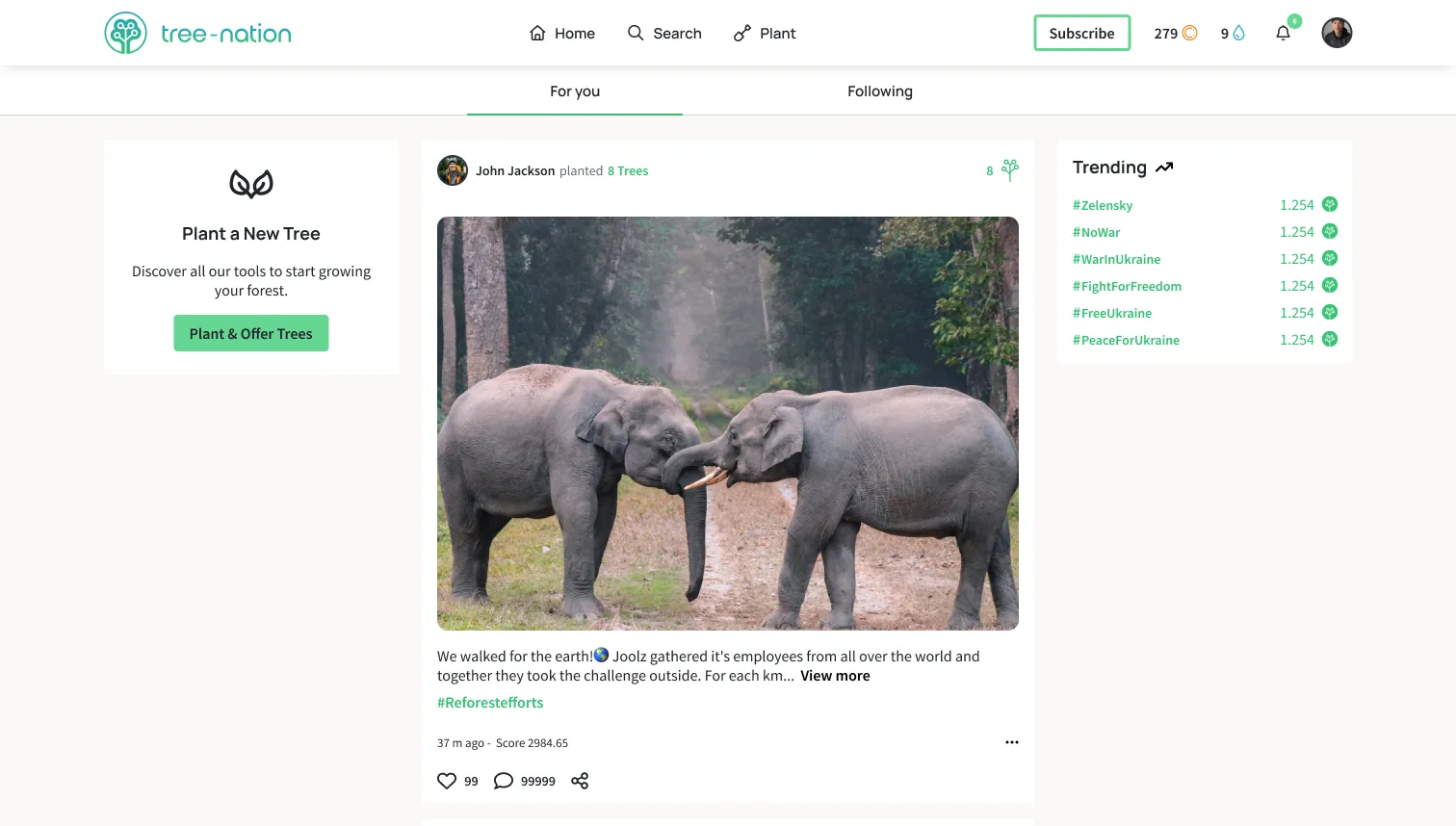
The solution was a feed-based model built around two modes: For You and Following. For You surfaces content based on engagement signals, giving every tree a chance to be discovered. Following lets users track specific organizations and campaigns they care about.

For You

Engagement-based

Content is ranked by engagement signals: likes, replants, comments, recency. Any tree can surface here. New users land in a curated stream without needing to follow anything first.

Following

Relationship-based

Content from organizations and accounts the user has chosen to follow. Intentional and curated. This is where B2B clients have guaranteed reach with their engaged audience.

Tree Feed UI: For You and Following tabs
Tree Feed: For You and Following tabs

The engagement loop connects viewing to action. Each step feeds the next: a view creates a signal, engagement amplifies reach, a replant introduces new content to a new audience, and the feed updates to reflect what's resonating.

Engagement loop: View → Engage → Replant → Feed updates
04. The Hard Problems

Three tensions that shaped the design

01

Attribution vs. social proof

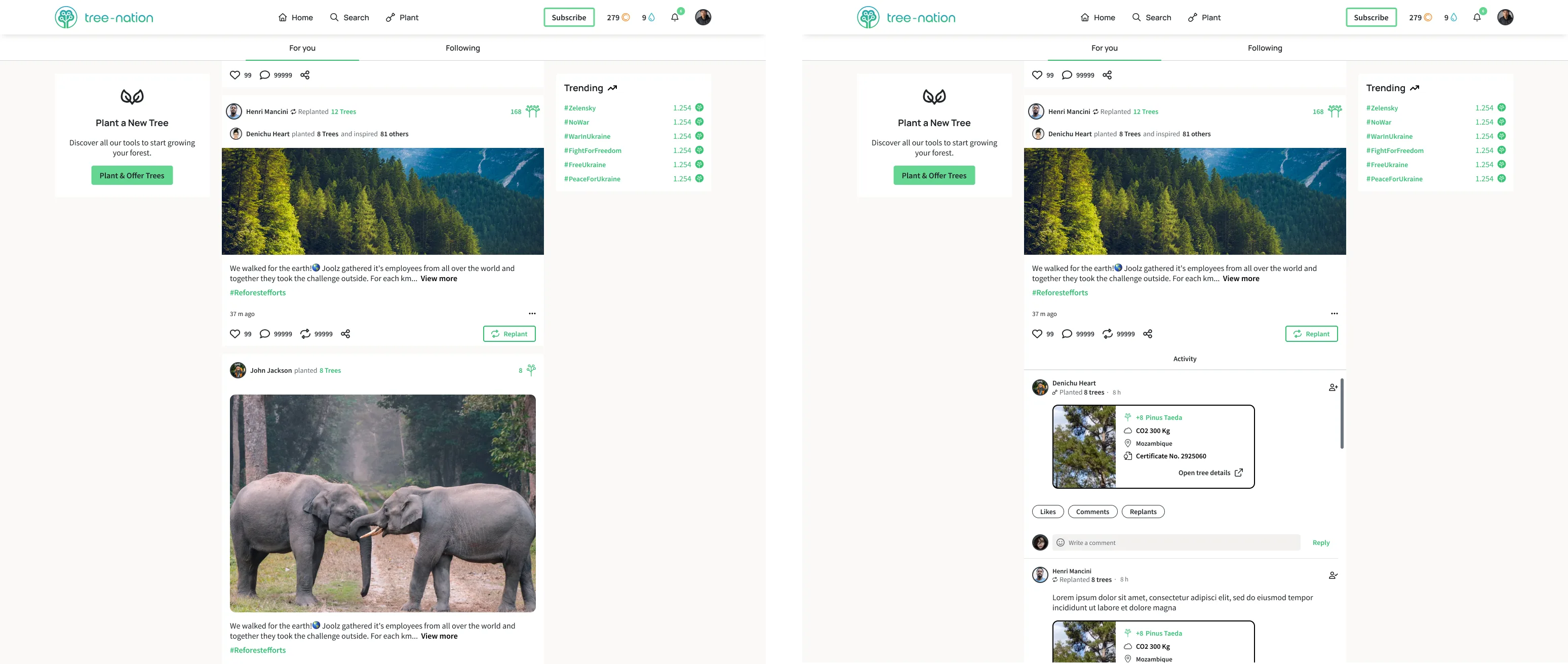
When a tree is replanted, who gets credit: the original planter or the replanter? Resolving this mattered for two very different motivations. B2B clients needed brand visibility on content they'd paid for, while individual users needed their action to feel meaningful. The header design had to satisfy both simultaneously.

Tree header states: attribution and social proof variants
Tree header states: resolving attribution and social proof
02

Credits break the loop

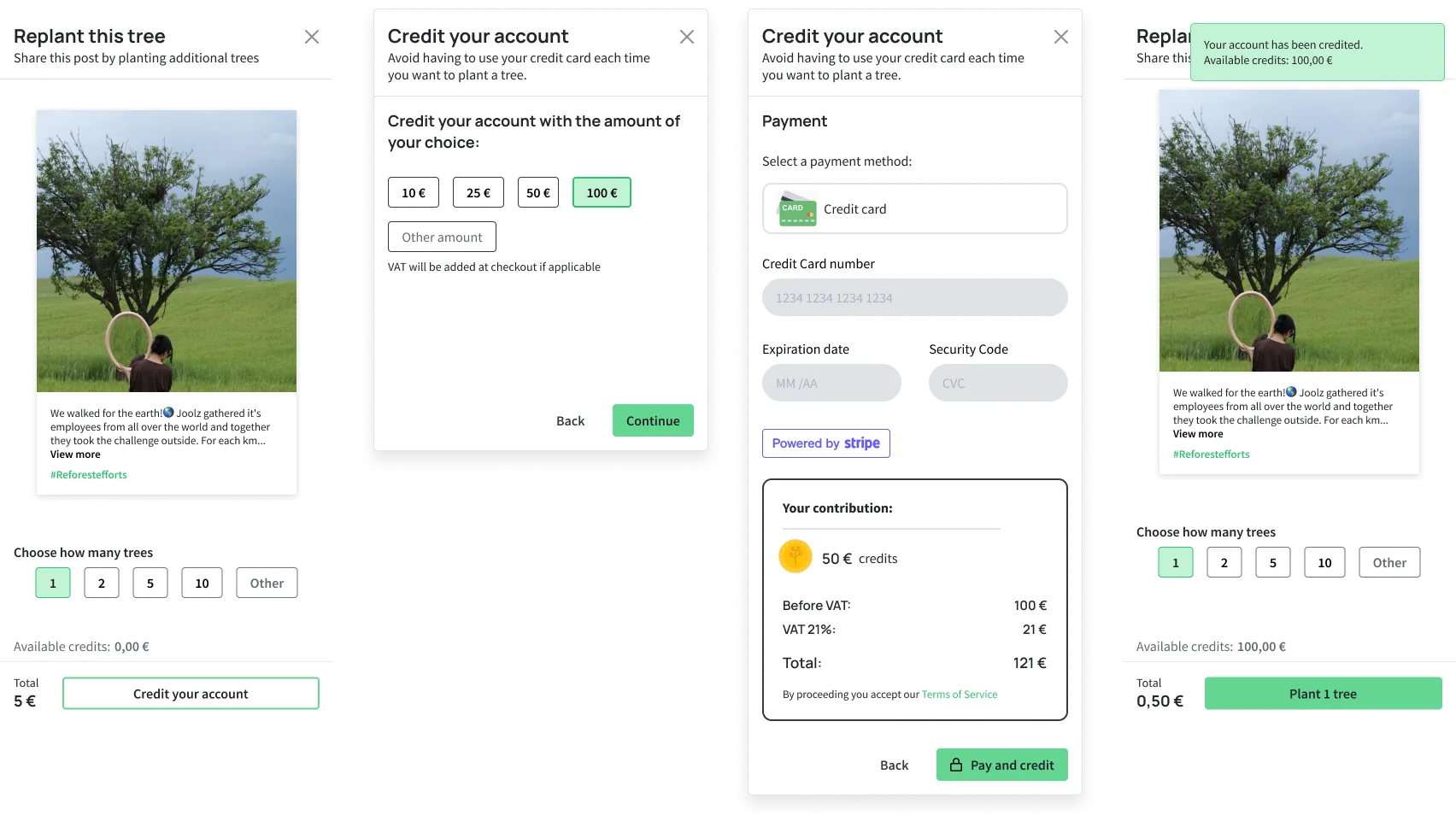
Replanting requires credits. If a user wants to engage but has none, the loop stops cold. The design had to handle the empty credit state gracefully, keeping the action visible and the path to credits clear, so the moment of intent wasn't wasted.

Empty credit state: handling the broken loop
Empty credit state: keeping intent alive when the loop can't complete
03

Algorithm misalignment

Surface too much engagement bait and the feed loses its environmental credibility. Surface too little and it feels dead. Calibrating what "good engagement" looks like for a tree-planting platform meant defining ranking rules that rewarded genuine interest without incentivizing noise.

Image quality Social engagement Boosts Content Virality
Algorithm design: ranking signals and their weights
05. The Outcome

From secondary feature to default entry point

The Tree Feed became the default home experience for logged-in users, replacing what had been a static landing page with no engagement mechanism.

B2B clients gained visibility into reach and engagement for the first time. Content that previously sat dormant now had a distribution system that could amplify it based on genuine engagement signals, turning a publishing problem into a distribution asset.

Tree Feed as the default home experience
Tree Feed: default home experience for logged-in users
06. Reflection

Designing distribution

This project taught me that content and distribution are separate design problems, and most products solve the first while ignoring the second. A page can hold content. Only a system can spread it.

The hardest part wasn't the feed layout. It was defining what "good" looked like in a context where engagement signals had to be calibrated to environmental credibility, not just growth metrics.

Takeaway

Content without distribution is invisible

Building a content surface isn't enough. The harder, less obvious problem is designing the system that decides what spreads, and how. The layout is the last thing you design, not the first.

Constraint as design input

The credit system shaped a better loop

The credit constraint could have been treated as a blocker. Instead, it became a forcing function that made the engagement loop more intentional, keeping the feed from becoming pure engagement bait.